

Thank you for being a regular reader of An Africanist Perspective . If you haven’t done so yet, please hit subscribe to receive timely updates on new posts along with over 34,000 other subscribers. New regular content is free. Book reviews and the archives are gated.
I: What African policymakers need to know about the origins of modern economic growth
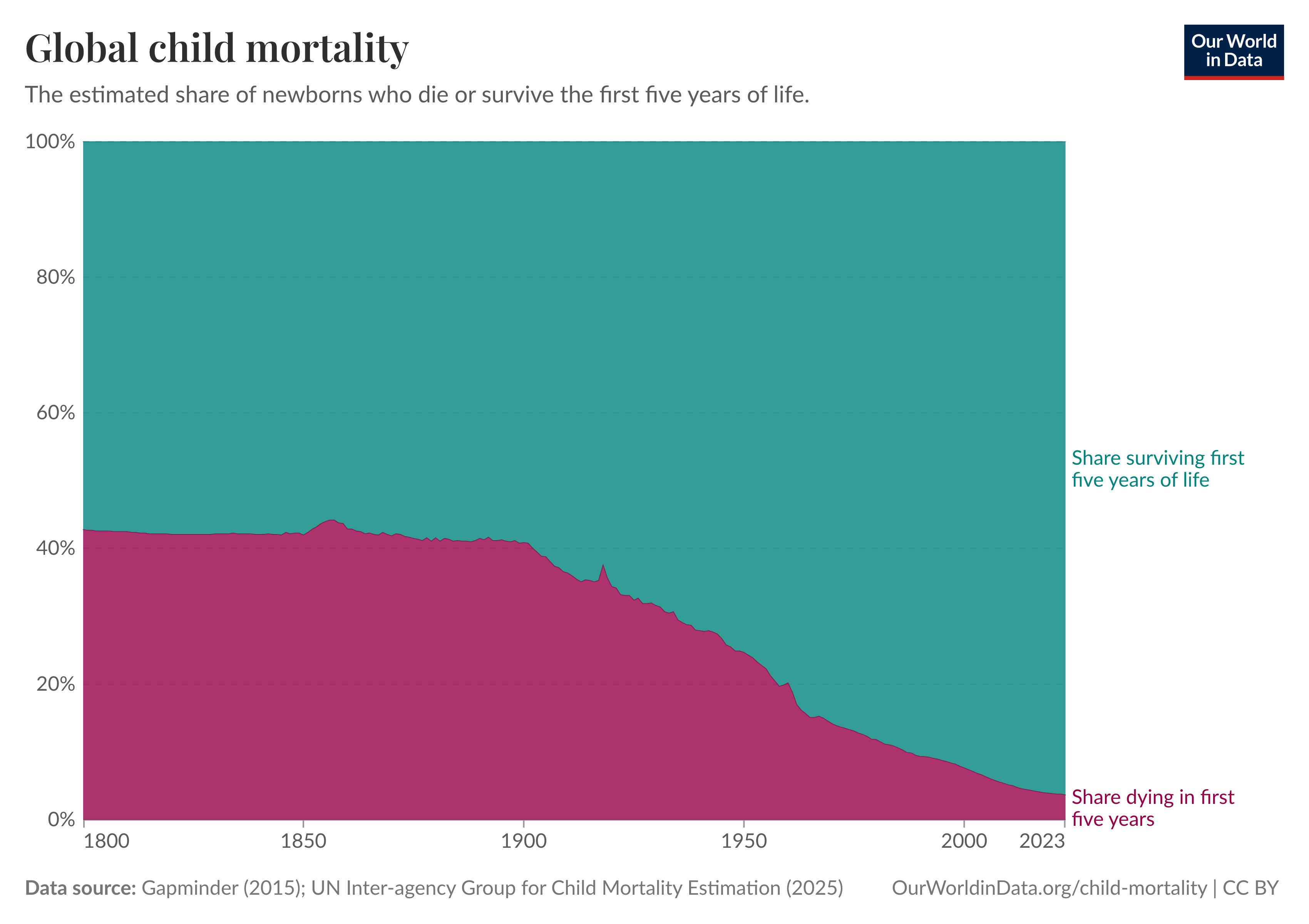
Modern economic growth is a relatively recent phenomenon. Before the modern era, there was, relatively speaking, a lot less variation around the world in individual-level measures of development outcomes. The average person was illiterate, lived a life characterized by poverty, scarcely had any material possessions, and died young. As late as 1900 about 40% of all children born died before they turned five.
Then over a few decades in the 18th century something clicked in northwestern Europe and unleashed what we understand today as sustained modern economic growth and the extension of mass prosperity.
Well, that is one version of the story; and one that admittedly compresses economic history across space and time.
There’s another version of the story that is more variegated. In this rendering, modern economic growth did not just spring out of nowhere. Instead, it was the culmination of centuries of cumulative marginal improvements (in trade, finance, law, politics, governance, engineering, science, etc) that eventually came together and ignited the commercial and then industrial revolutions that we are now familiar with. Notably, these societies developed cultures of growth and progress that sustained these processes over centuries.
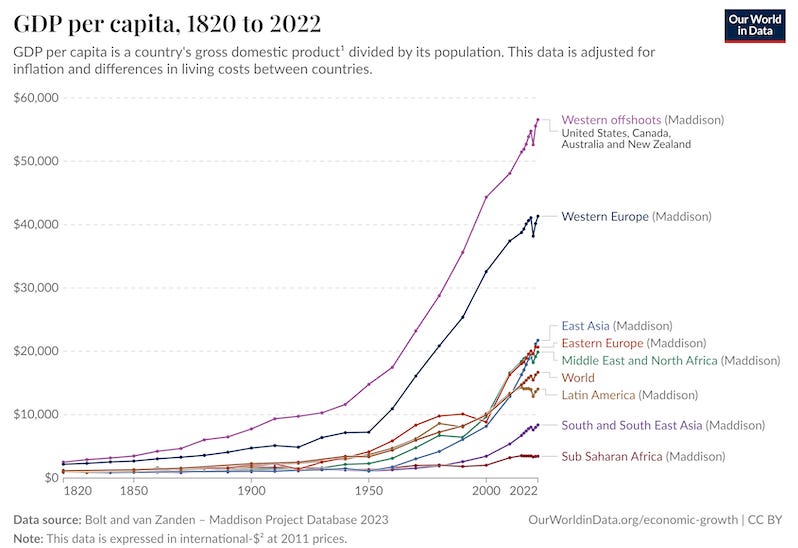
Stated differently, societies that were able to quickly adopt and domesticate the organizational forms (especially polities, firms, and family units), technologies (with emphasis on scientific mastery of the physical world), and human habits (in personal, professional, and civic life) that are necessary to sustain modern economic growth and development were decidedly different from those that did not. With this in mind, to understand contemporary variation in the distribution of national incomes one must first understand (1) the origins of modern economic divergence over centuries; and (2) why certain countries or regions of the world have failed to engineer quick catch-up growth since the advent of modern economic growth.
And what were those differences that produced divergence? There are countless bad explanations out there of economic divergence over the last 500 years — ranging from hand-wavy essentialist takes on identity and culture, to heroic extrapolations across entire regions based on well-identified but narrow social scientific studies. There are also some very good academic debates on the topic — especially among works that explore the divergence between China, the Muslim world, and Western Europe (see here, here, here, here, here, and here, for example).
For policymakers interested in a practical understanding of the origins of modern economic growth, I’d advise them to rely on established patterns within literatures (as opposed to individual studies); take real histories of real places seriously; and to privilege parsimony over ornate stories that are little more than descriptions of symptoms and not fundamental causes of economic divergence across time and space.
This leads me to two factors that policymakers (as opposed to academics) should consider to be important for catalyzing and sustaining modern economic growth: stateness and elite hegemony (these should broadly be viewed as necessary but not sufficient conditions).
Centralized polities created the possibility of organizing (competitive) commerce at scale within and across well-defined territories. They provided security and other important public goods necessary for commercial flourishing, allocated and protected property rights, facilitated the scaling up of individual-level innovations, and through competition with other states provided strong incentives for economies to stay competitive and at the cutting edge of emerging innovations (i.e., stateness facilitated catch-up development). And following the advent of the modern era, states also became important vessels of national politics and policies — especially social policies that massively upgraded the quality of human capital. This, in turn, enabled both voluntary (e.g., stable wage labor) and coerced (e.g., taxation) redistribution of the benefits of commerce at scale — thereby enabling mass prosperity in a select set of prosperous polities.
Of course, stateness also facilitated the pillaging of less powerful states and peoples throughout the world, in addition to the benefits outlined above. But that’s no reason to dismiss the role of states as powerful platforms for beneficial collective action towards improving human welfare.
Organized elite hegemony was equally important. Here, what I mean by “organized elite hegemony” are religious, cultural, academic, and political elites who had the authority (and qualifications) to set (aspirational) standards and organize societal effort towards specific ends. Such elites had sufficient influence over the general public to coordinate social, political, and economic life; in addition to pursuing their own self preservation in ways that were generally consistent with the advancement of society at large (or at least as they understood it). Consequently, they were able to spawn and maintain cultures of progress, mechanisms for disciplining elites (religion, science, rational organization of civic life), and a sense of continuous improvement.
Importantly, the existence of organized elite hegemony facilitated change without societal collapse. Sometimes this slowed down progress, as when incumbents sought to protect their privileges (especially against mass interests). But in general, it enabled societies to change — as all societies must —on their (elites’) own terms, rather than being yanked about like rudderless vessels at sea by the forces of history.
Notice that the operative mechanism here wasn’t social stratification as an end in itself, or anything special about the specific elites who were in charge.
Rather, it was specialized sets of elites and their networks as a technology for coordination at scale and entrenching habits of continuous personal and social improvement. Some scholars have characterized this definition of elite hegemony as “institutions.” Unfortunately, such characterizations tend to be ahistorical and project contemporary institutional qualities and ends to earlier periods — almost as if the people-centric antecedents were destined to yield modern institutional forms and practices. I prefer to emphasize the role of proto-institutional elite formations in part because institutions tend to be as good as the people staffing them, in addition to their underlying logics and norms. The point here is that merely adopting “successful” institutional forms isn’t enough.
With this in mind, it is (or should be) clear how the confluence of strong states and organized elite hegemony gave some societies an advantage over their contemporaries; and prepared them to both engineer and exploit the benefits of modern economic growth.
How does this framing apply to our understanding of economic growth and development in contemporary African states? To that we now turn.
II: Why are African countries relatively poorer than most parts of the world?
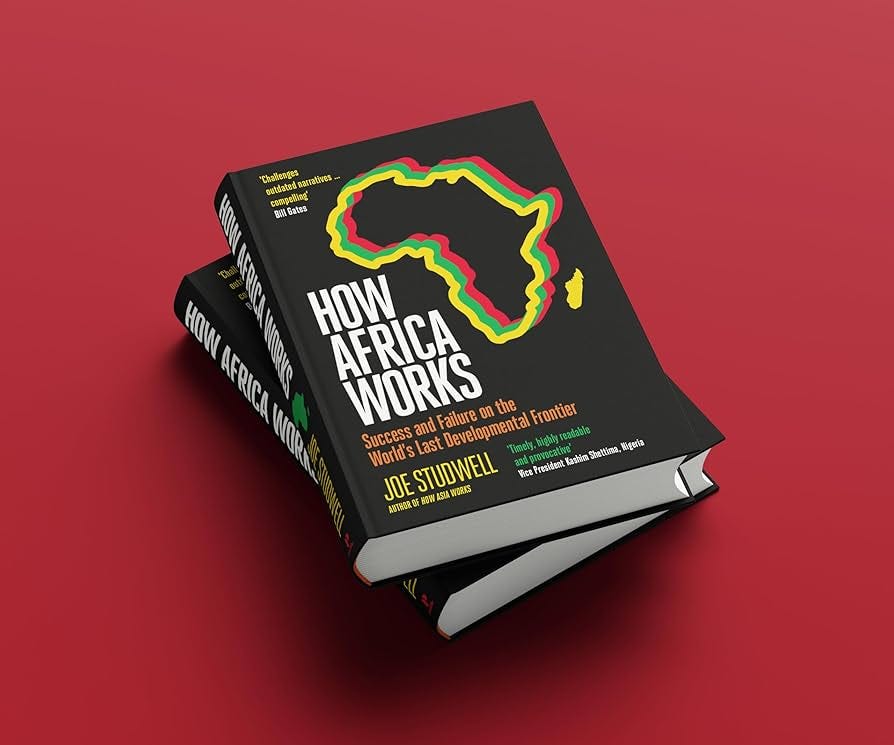
In How Africa Works, Joe Studwell starts off by attempting to explain why African countries are poor today. It’s worth dwelling on this question since the many stylized explanations of the persistence of poverty in Africa out there fall well short; and because you can’t solve a problem that you don’t understand. Studwell lands on three main explanations that deserve close attention.