

Thank you for being a regular reader of An Africanist Perspective. If you haven’t done so yet, please hit subscribe to receive timely updates on new posts along with over 35,000 other subscribers. New regular content is free. Book reviews and the archives are gated.
I: Can we trust the evidence on Rwanda’s economic development?
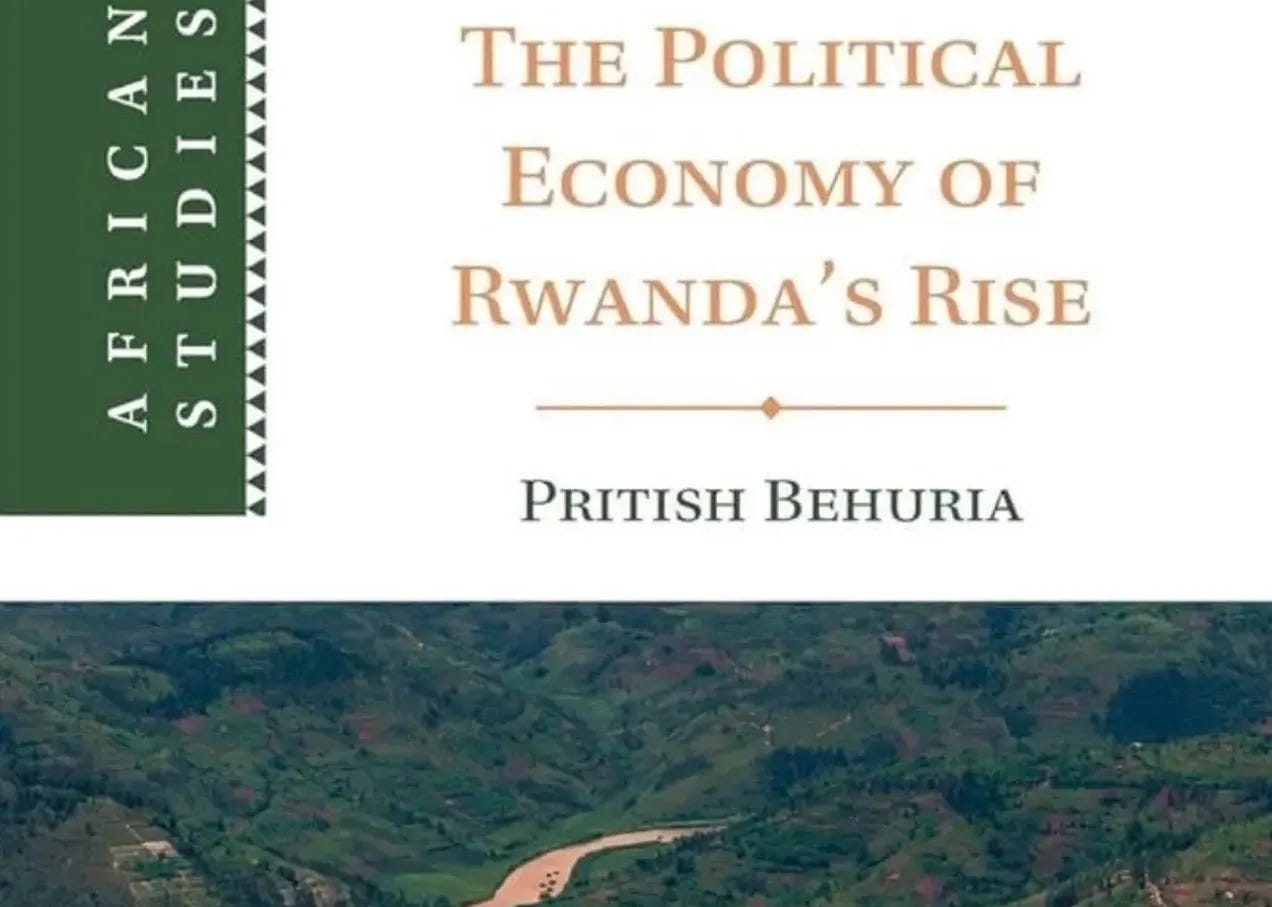
Pritish Behuria’s The Political Economy of Rwanda’s Rise (Cambridge University Press, 2026) is brilliant. Despite being intended for an academic audience, I highly recommend the book to a general audience because it provides an in-depth description of the challenges of late development in the 21st century; and how a specific country (Rwanda) is going about overcoming those challenges. Readers will greatly appreciate the fact that The Political Economy of Rwanda’s Rise is refreshingly different from your standard Rwanda book. Behuria doesn’t pretend that Rwanda’s history began in or is only about 1994. He’s not out to settle scores. And he raises constructive questions about the political economy of Rwanda’s current development strategies.
The book is freely available from Cambridge University Press.
However, before diving into the specific evidence and arguments in the book, it is worth addressing an important point Behuria makes in the final chapter of the book:
Debates about Rwanda’s growth success are largely concerned with quarrelling over the veracity of data. There is less attention to the distinct nature of its development strategy and what that tells us about the challenge of late development under contemporary globalisation.