

Thank you for being a regular reader of An Africanist Perspective. If you haven’t done so yet, please hit subscribe to receive timely updates on new posts along with over 36,000 other subscribers. New regular content is free. Book reviews and the archives are gated.
I: Why vibes matter
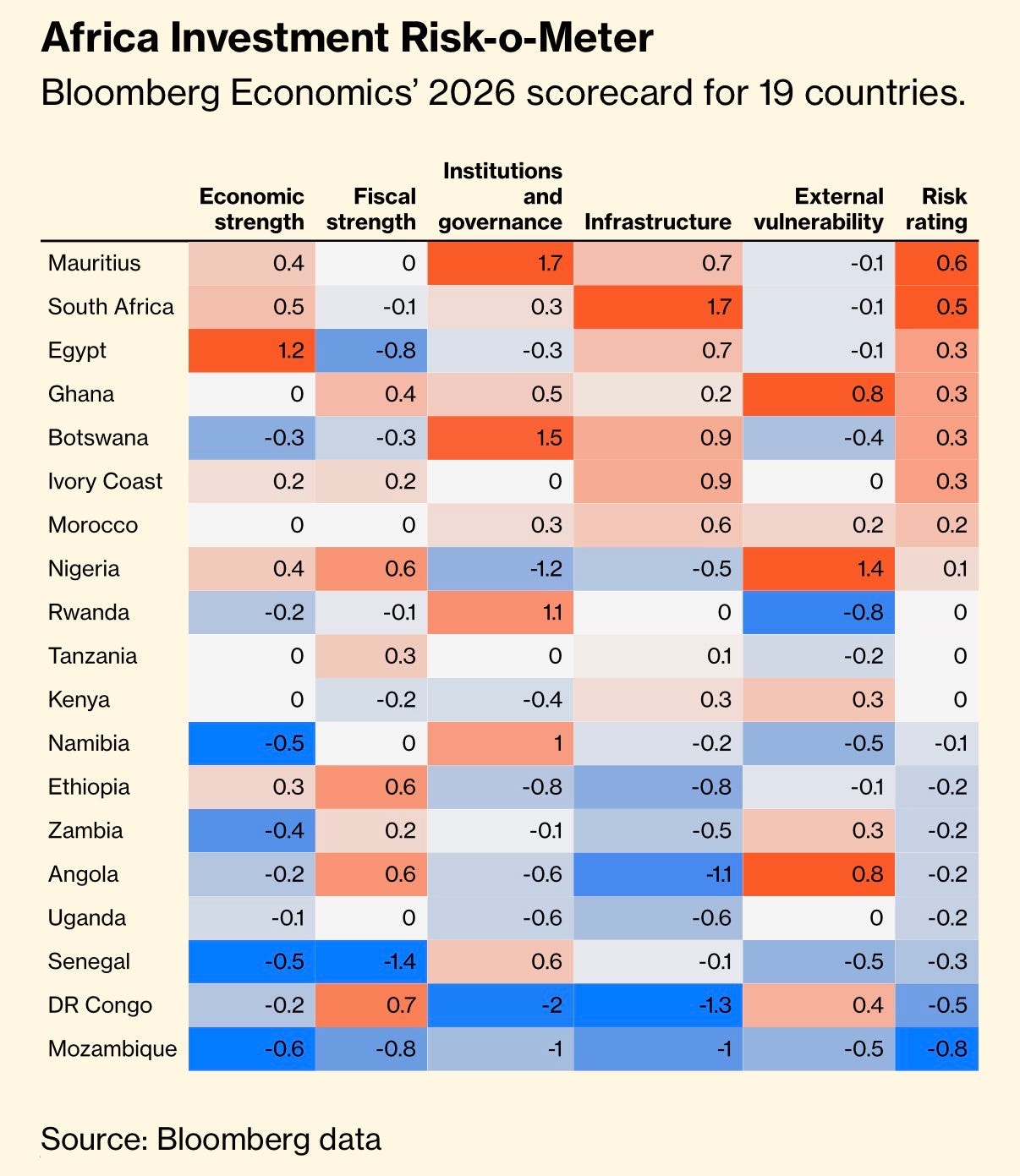
Perhaps I’m reading too much into this, but I was intrigued by Bloomberg’s framing of its 2026 Investment Guide to Africa. This is the first time in a while that I’ve seen African economies being pitched by analysts as a safe haven in the midst of a regional/global crisis. Consider this:
Africa was already in the midst of an investment boom before the US and Israel went to war with Iran this year. Now, as the conflict exposes the costs of overreliance on the Middle East for oil, fertilizer and even global trade routes, African industries look even more attractive, and money is flowing in from multiple continents.
And here’s a recent story from Reuters:
Moody's raised its outlook for sub-Saharan African countries to positive on Wednesday, saying reforms had helped them weather inflationary pressures, while strong commodity prices and easier access to financing had improved their fiscal positions.
And the interesting thing about the Moody’s outlook is that it’s actually fairly balanced, and considers the downside risk. These include the heavy debt burden borne by countries like Kenya and Zambia, inflationary pressures from weather-related events, and movements in the bond markets. The latest IMF analysis presents a similarly balanced take on regional economies:
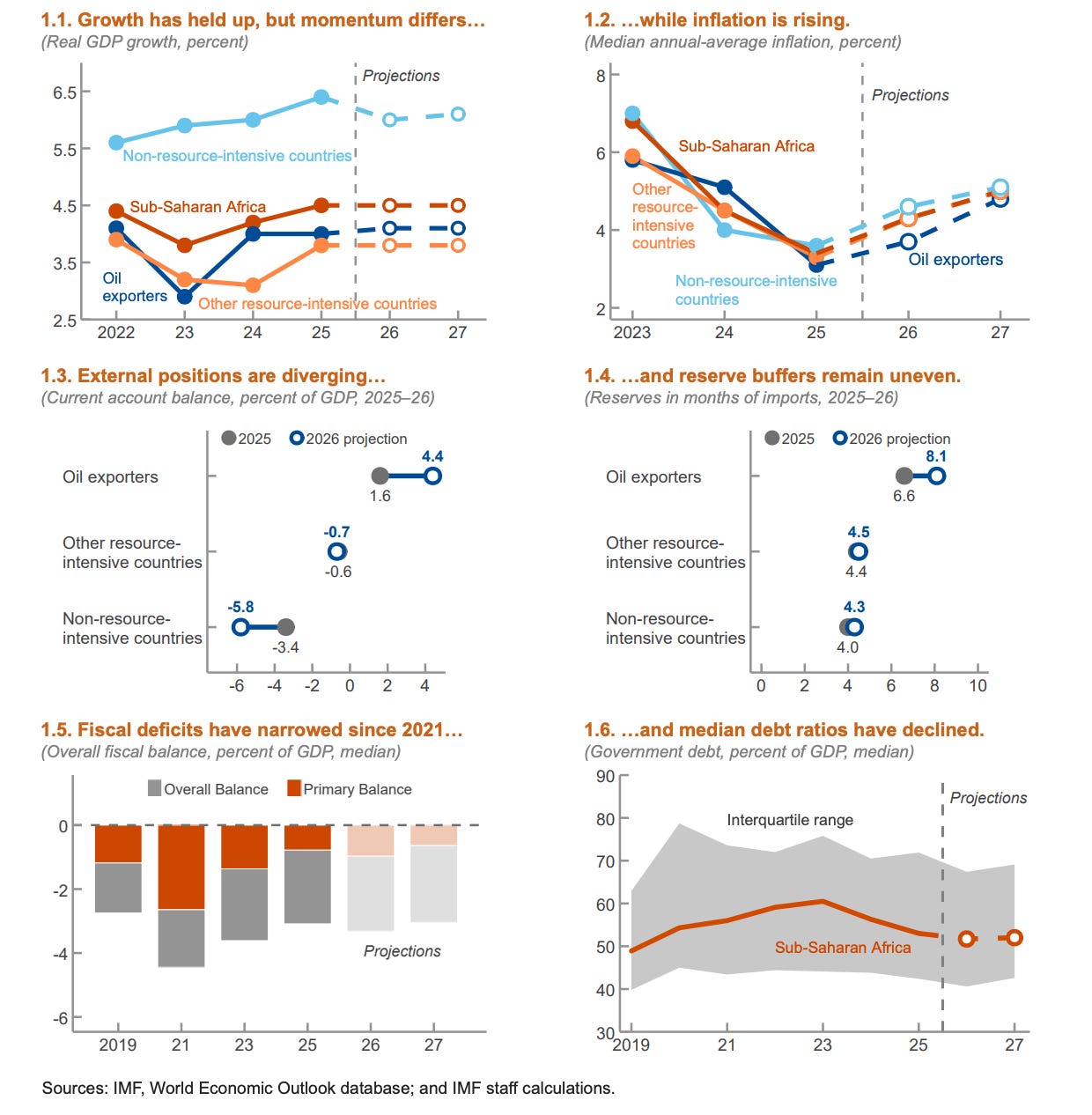
Sub-Saharan Africa is expected to grow by 4.5 percent in both 2026 and 2027. Global supply adjustment, favorable export receipts in some countries, and earlier reforms have helped cushion the Middle East war shock. But steady regional growth masks different country experiences with slowing growth in non-resourceintensive economies and continued resilience in resource-intensive ones. Median inflation is projected to rise from 3.4 percent in 2025 to 4.3 percent in 2026 and 5.0 percent in 2027. Pre-war fiscal adjustment and declining debt ratios are important achievements, yet high interest burdens, low reserves in many countries, and falling aid leave limited room for absorbing another adverse shock. Risks remain decidedly tilted to the downside, including renewed energy supply disruption, sovereign repricing, further aid reductions, and severe weather shocks, especially El Niño. Policies should sustain needed fiscal adjustment, save temporary commodity windfalls, target support to vulnerable households, and contain persistent inflation. Protecting productive investment and enabling private-sector growth are essential to make future shocks less costly and improve longer-term living standards.
Typically, the real downside risks outlined above would’ve been viewed as good reason to catastrophize. This is because whenever there’s a global shock (especially one as complicated as the current one) most Africa analysts at global advisory shops and media reach for their catastrophizing lenses and immediately imagine all the ways that the sky could fall. Even the positives (high commodity prices, declining borrowing costs, and stable macro outlooks) would’ve been framed as disincentives for serious reform. Not any longer, it seems.
Why does this matter? Well, vibes matter because they reflect underlying theories of economic change. If you believe that economic development happens unevenly (i.e., all you need are good-enough preconditions and that not all bits of the political economy need to be working at peak levels all the time), you are less likely to catastrophize about risk and instead seek to manage risk as you focus on the upside (and there’s always an upside). Those who believe in perfect preconditions (perfect politics, perfect institutions, perfect policies, perfect global conditions, etc), on the other hand, are masters of noticing and catastrophizing about what’s missing and sitting on their hands. Vibes matter because they tip the scale in either direction in the popular imaginary. And I’d argue that we are long overdue a permanent shift in the vibes regarding African economies.
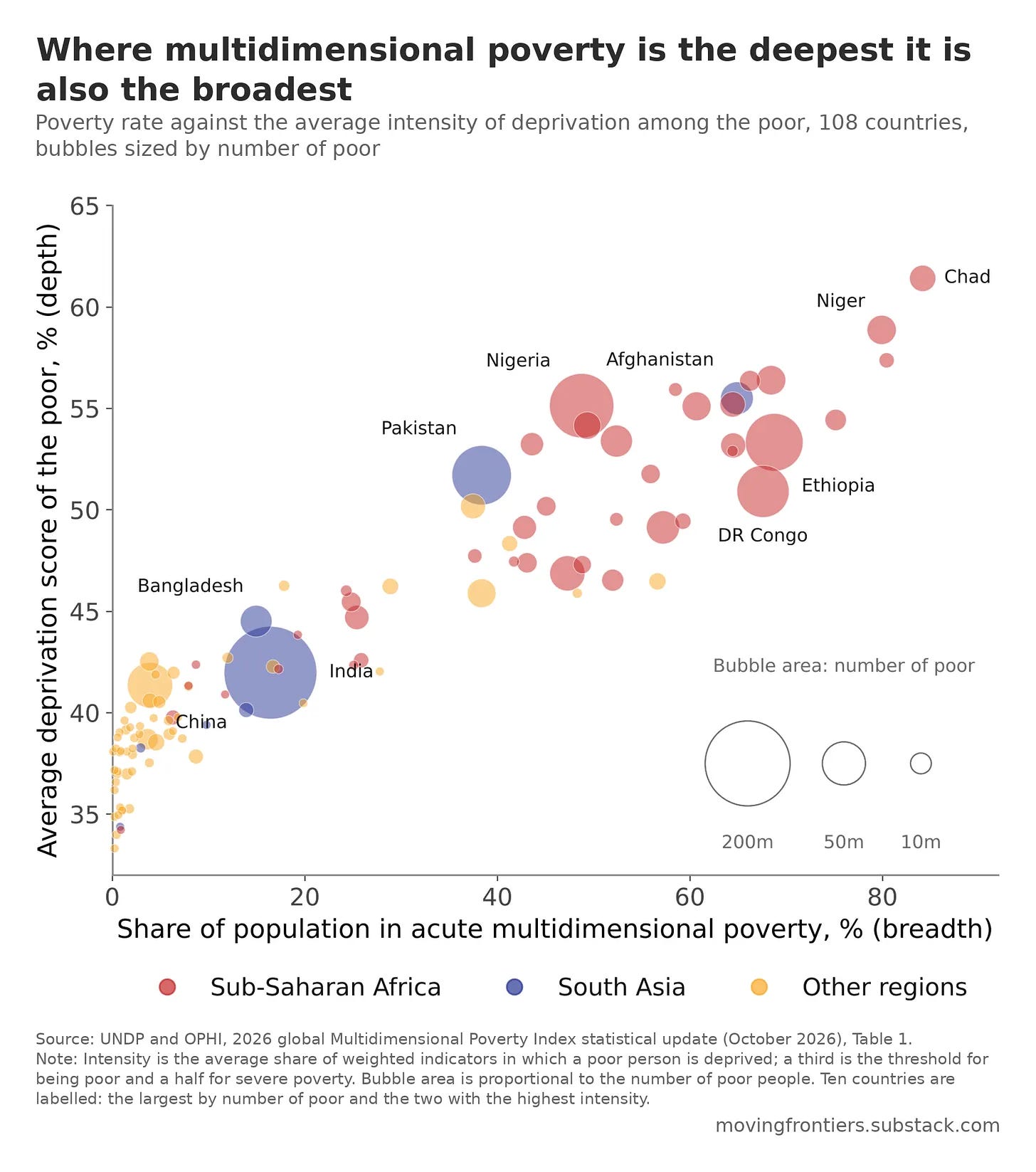
Don’t believe all you hear from the NGMI cynics (take their more accurate criticisms seriously, though). As shown in the figure above, presently the numbers do not look good with regard to eliminating extreme poverty across the Continent. Many consider this a justification to trash efforts to engineer faster growth in the region. However, it’s worth remembering that growth is absolutely important for poverty reduction.
II: The sources of resilience in African economies
Back in May I wrote a piece for the Financial Times arguing that contemporary African economies are a lot more resilient than most people give them credit for. Written as everyone was trying to assess the real impacts of the U.S./Israeli war on Iran was on regional economies, the point of the piece was to caution against unnecessary catastrophizing about the Continent’s prospects in the face of emerging shocks (whose cadence I think will only increase).
I argued that African economies are more resilient today because (1) reforms in the 1990s succeeded in entrenching pursuit of macro stability as a goal (with ever fewer economies going through the meltdowns of the 1980s over time); (2) the region’s economies have bigger private sectors which allow for adjustments to shocks without (state-mismanaged) collapse; and (3) as a whole, the region’s trade partners and sources of capital (and credit) are more diversified (including within the continent).
We’ve come a long way since Europe attracted almost half of African exports in the mid 1980s. Plus, overall, the 1980s crises and the disastrous long decade that followed (roughly, 1980-1995) were simply a bad case of bad timing. African states were barely 20 years old, with many still buffeted by postcolonial political upheavals as they tried to make self-rule stick. Therefore, responding to the shocks of the 1970s which were compounded by the debt crises of the 1980s and the fiasco of structural adjustment programs was always going to be an uphill endeavor for Africa’s relatively young states. It shouldn’t surprise anyone that many of these states didn’t ace the test (this is a terribly under appreciated feature of how African countries managed the 1980s crises and after; too much of the focus has been on politics and not on the fact that the impact of external shocks was partially a function of the age and fragility of African polities — read your Mkandawire, people!).
To these points I’d also that the correlation between regime type and economic performance (including the ability to attract big ticket investments) is gradually weakening across Africa. In other words, private investors are willing to compartmentalize their demands for institutional/policy quality and bet on co-evolution of the same with growth and development (which is how these things happen — see Yuen Yuen Ang’s work on China, for example). You see this in lists like the one above by Bloomberg. The fact of the matter is that investors and governments can co-create the risk profile of their specific sectors. But that only gets to happen if vibes expand everyone’s imagination.
III: Even African elites (and capitalists) are beginning to believe in the possibility of African progress
It’s worth noting that African private sector players have been an important part of the vibe shift and the emerging willingness to bet in the coevolution of African economies and politics/policies/institutions. We are increasingly seeing medium to big ticket investments by large African firms in both their home jurisdictions and in other African countries (for example, see here, here, here, here, here, and here). Even intra-African leisure travel is on the up for some destinations.
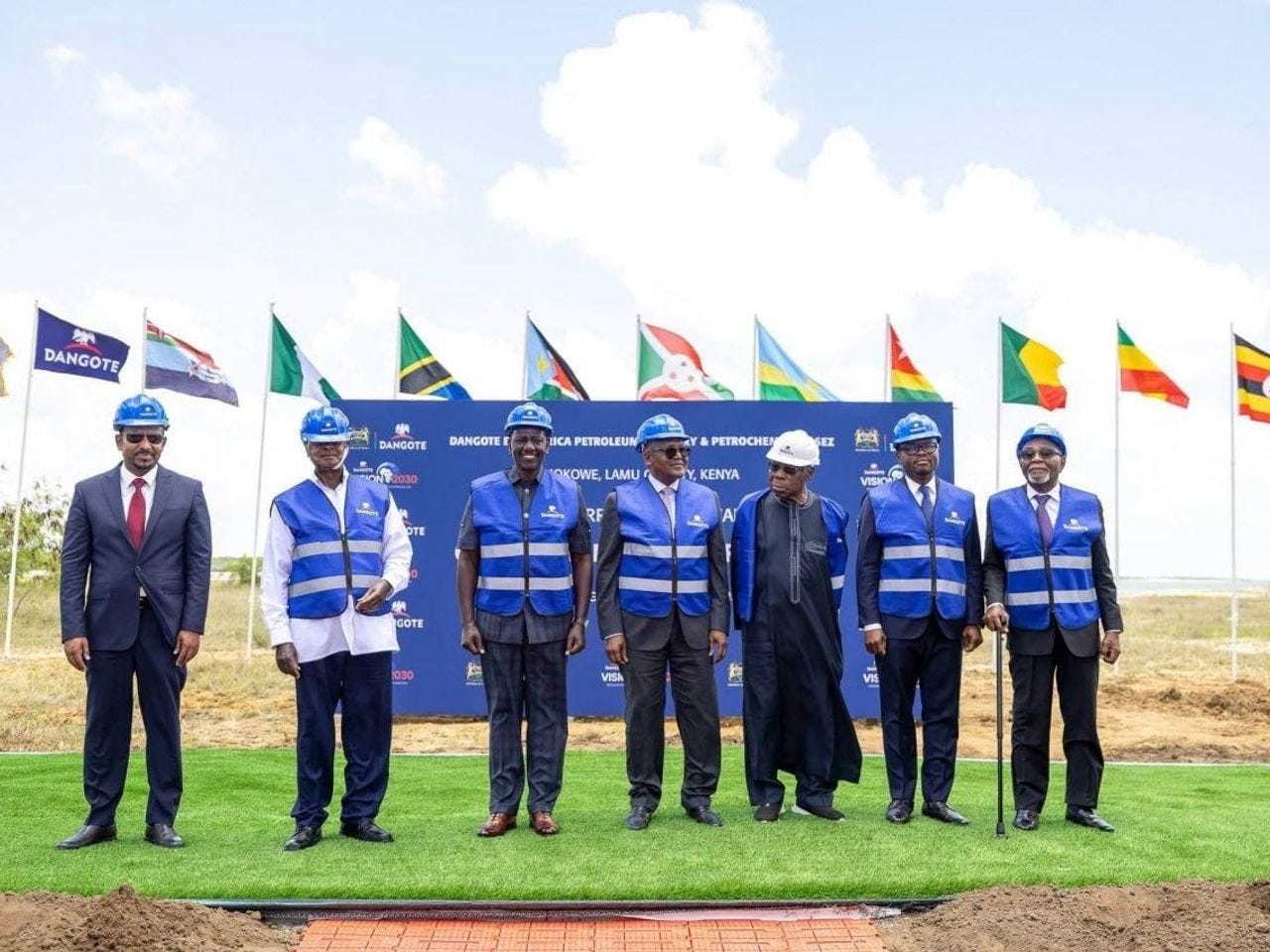
In other words, African capital is gradually becoming less (irrationally) scared of African economies. That, too, is a good thing that’ll help push along the process of co-evolution (hopefully in the right direction) of politics/policies/institutions and the processes of economic growth and development. This is partially because domestic firms stand a better chance of forcing the rationalization of policymaking processes. As we recently saw in the case of Aliko Dangote’s battle with Nigeria’s petroleum regulator, in the process of maximizing profits, African capital can fight for positive institutional change rather than always resort to bribing their way around obstacles or choosing to cut and run (as is typical of foreign firms). This is also why policymakers and leaders ought to be encouraged to stop the habit of readily rolling out the red carpet for foreign investors (including with all manner of fiscally costly incentives) while stiffing their own SMEs and big businesses.
The fact of the matter is that the process of co-evolution suggested above is likely to point in the general direction of positive improvement if the firms and capital involved have a long-term vision and aren’t quietist. While some foreign firms have the political savviness and connections to make this happen, domestic firms are a much better bet.
One of the remaining weak links is Africa’s ruling elites. Historically, many of them have been so unbothered about the mechanics of modern economic growth and development to even protect their own property rights. Rather than invest in productive capacities at home or in the region, many hid their (stolen) wealth in high-income countries (thereby contributing to the billions in capital flight from the Continent each year). While most forms of capital controls would be a bad idea, it would help if the vibes provided social sanctions against this habit. Those with skin in the game (i.e., African elites) are the best placed to provide the patient capital that African economies need. More importantly, one hopes that the current cycle of good vibes creates the incentives for strong property rights protections across the broad that will encourage the retention of as much capital within the Continent as possible.